The problem we solve

Risks are known locally,
but invisible centrally.

An AI-driven Risk Operations layer for major financial institutions. We surface signals across borders, automate remediation, and prove control effectiveness on demand.

Sensitive data stays inside its jurisdiction. Risk signals travel.

🔍
Cross-border pattern surfaced Correlated across jurisdictions no single team could see
Remediation underway Evidence chased, escalations routed, gaps closed
Defensibility, on-click Immutable lineage. Ready for examination
Why this happens

Three failures
compounding into one.

Almost every catastrophic regulatory failure of the past decade was first identified somewhere inside the organisation. The breakdown wasn’t detection. It was escalation.

  • 🌎
    Compartmentalised intelligence

    Risk signals are trapped inside jurisdictional silos. No single team sees the full pattern. Cross-border crime, concentration risk, and cascading failures hide in the gaps between systems.

  • 📋
    Manual control testing

    Procedures aren’t followed. Reporting stays local. No escalation, no prioritisation, no understanding of cascading impact. Most issues surface in a post-incident review — too late to act on.

  • The management-layer gap

    40–70% of senior risk management time is consumed gathering data and communicating analysis — not acting on it. Decisions arrive late because the synthesis arrives late.

And the problem is getting worse.

LLMs, AI agents, and tools like Cowork are generating unstructured information at an unprecedented rate. Most of it never reaches a system of record. The gap between what your organisation knows and what its risk function can see is widening — quickly.

The platform

Tradle sits above your KYC platform, your data lake, and your GRC systems.

It reads their outputs and does the thinking that’s currently trapped in siloed spreadsheets, meeting notes, and the heads of the people running your risk function.

WHO RECEIVES THE INTELLIGENCE Chief Risk Officer Senior Management Auditors Regulators TRADLE — CONTROL INTELLIGENCE Reads. Correlates. Reasons. Routes. STRUCTURED & VISIBLE UNSTRUCTURED & INVISIBLE KYC AML GRC Data Lake Core Banking Sanctions Risk-operator workflows Spreadsheets Meeting notes Tribal knowledge Email Policies

A clean separation. Jurisdiction-level workflow stays where it is. Tradle is the orchestration and intelligence layer above it — reading from both the structured systems your IT function manages and the unstructured signals your people generate every day.

Capabilities

What Control Intelligence does.

Four capabilities working as one layer. Local enough to respect data residency. Global enough to see risk no single jurisdiction can.

01

Risk Visibility

LLM-driven discovery surfaces material signals from the noise of control reporting — across emails, feeds, registers, and unstructured data your existing stack can’t read.

CI LLM
02

Automated Remediation

e-Policies execute risk-control procedures end-to-end — chasing evidence, escalating violations, closing gaps — with humans in the loop where it matters.

e-Policies
03

Audit Defensibility

Every AI prediction and human action is written to an immutable blockchain ledger. On-click lineage at examination time — no scramble, no reconstruction.

Blockchain Audit
04

Data Sovereignty

Local AI nodes (MyCloud) keep sensitive data inside its jurisdiction. Risk signals travel through the network. The underlying data does not.

MyCloud
In practice

Where banks deploy us first.

Each domain is a wedge. The platform is one. Banks typically begin where the risk exposure is most acute — and expand outward as the architectural value becomes obvious.

01
Financial Crime

KYC & AML

Cross-border financial crime is a pattern problem. Patterns are invisible to any single jurisdiction. That’s the gap.

A high-risk client renewal flagged but unactioned in one jurisdiction. Negative news accumulating externally. A relationship manager escalating an exception without knowing the same entity has open sanctions alerts in a system they don’t have access to. None of this is a workflow failure — it’s a management-layer failure.

Risk reduced: the operational risk that lives in manual signal-gathering, and the regulatory exposure of patterns no one had visibility on.
02
Operational

Cascading Control Failures

When a control fails, what fails next? In most banks, no one knows until it happens.

An IT patch delay cascades into access control failures. Access failures cascade into trading limit breaches. Trading limit breaches cascade into settlement issues. Each step is logged in a different system, owned by a different team. The cascade is real but invisible until it has played out.

Risk reduced: the post-incident review where the cascade is finally understood — and the annual operational risk assessment that catches half of what’s actually happening.

03
Third Party

Vendor & SOC 2 Remediation

Vendor risk management is one of the highest-volume, lowest-judgment workflows in any bank. And one of the most under-automated.

Recertifying hundreds of vendors annually means hundreds of evidence requests, hundreds of partial responses, hundreds of follow-ups. Most of the work is administrative. None of it is uninteresting from a risk perspective — an unreviewed vendor is exactly the kind of risk that compounds quietly.

Risk reduced: the compounding exposure of vendors no one has time to properly recertify, plus the audit liability of a recertification basis built ad hoc rather than by design.

Track record

Regulatory-cleared infrastructure,
vetted across 21 countries.

A track record built over a decade with regulators, not after the fact.

FCA Sandbox

Graduated. UK Financial Conduct Authority Regulatory Sandbox.

MAS

Monetary Authority of Singapore accelerator participant.

R3

eKYC provider for the R3 blockchain consortium of banks and insurers.

AFIN

Network launched by IFC, MAS, and ASEAN.

21 jurisdictions

Active regulatory relationships across North America, Europe, Asia-Pacific.

Since 2014

Built alongside modern regulatory frameworks, not retrofitted to them.

The company

Built with regulators,
not after them.

Tradle was founded in 2014 to make compliance portable on a blockchain. A decade later, the architecture has matured into something larger: a Control Intelligence layer for global financial institutions.

The arc

The company was founded on a thesis that has aged well: that regulated trust — the foundation of KYC and AML — needs an audit primitive better than email and shared spreadsheets. The first product proved that thesis with banks and insurers across 21 jurisdictions, alongside R3 and AFIN.

The expansion into Control Intelligence followed two shifts that arrived almost simultaneously. Large language models became powerful enough to read the unstructured data where most risk signals actually live. And regulators started asking institutions to prove not just that controls exist but that they are effective — continuously, defensibly, with lineage on demand.

The audit primitive Tradle built for KYC turned out to be exactly the audit primitive an AI-augmented risk function needs. The platform is the same platform. The category is bigger.

What we believe

  • Risks are known locally and invisible centrally. Almost every catastrophic regulatory failure of the past decade was first identified somewhere inside the organisation. The failure was escalation, not detection.
  • Sensitive data should not cross borders to make risk visible. Signals can. The architecture decision matters more than people realise.
  • Audit defensibility is a product feature, not an afterthought. AI in financial services that cannot explain itself to a regulator is a liability waiting to be priced in.
Leadership

The team principals.

Recognised experts in KYC, AML, and enterprise networks. The combination of operational depth, advisory standing, and enterprise-software pedigree is unusual for a company of this size.

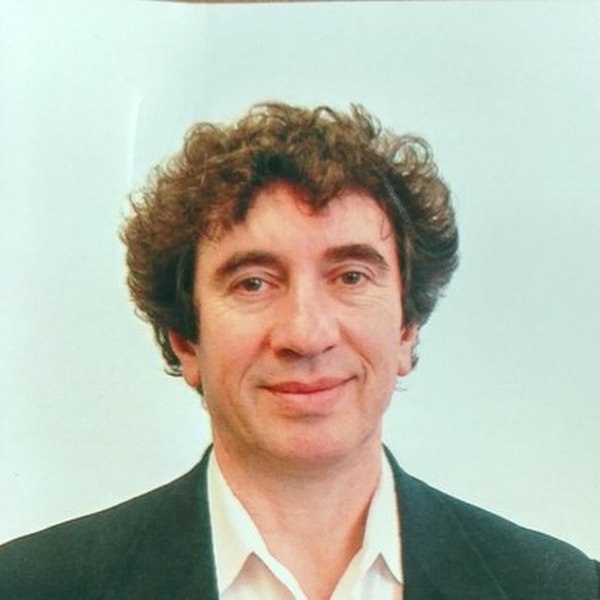
Gene Vayngrib
Gene Vayngrib
Chief Executive Officer

Co-founder of Tradle. Software executive whose products run at 90% of Fortune 500 companies. Sets the architectural direction and leads engagements with major banks.

Hans-Joachim von Haenisch
Head of KYC / AML Products

Advisor to the EBA KYC Expert Group. Previously Design Lead and Product Owner of the SWIFT KYC Registry, and Regional Head FI at Standard Chartered.

Jeff Lavine
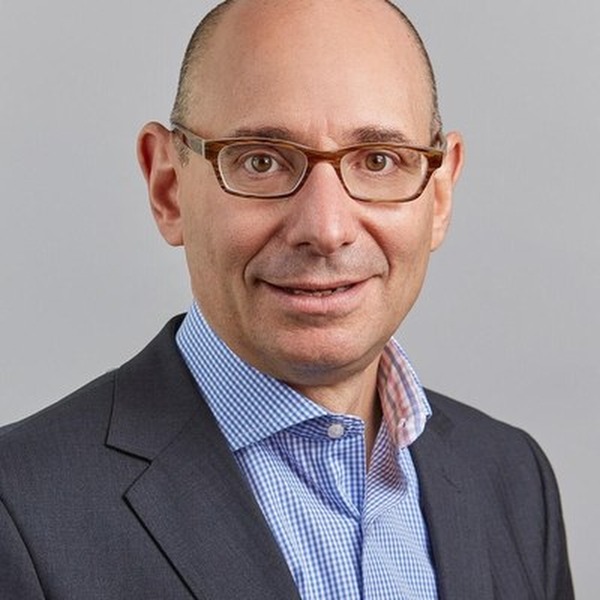
Jeff Lavine
Senior Adviser

Former Leader of the Global Anti-Financial Crimes Practice at PwC. Brings the regulatory and audit lens that shapes how Control Intelligence is positioned to risk and compliance leadership.

Harald Horgen
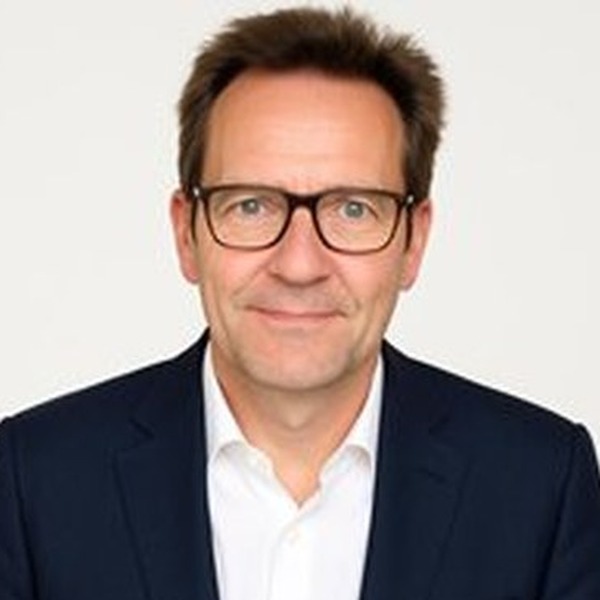
Harald Horgen
Strategic Alliances & Partner Engagement

30 years building international partner ecosystems for enterprise software. Leads strategic alliances and the joint go-to-market motion across Tradle’s global partner network.

Take the next step

If your risk function feels like it’s running blind,
it probably is.

Request a briefing with the Tradle team. Thirty minutes, no slides — we’ll walk through Control Intelligence applied to your specific risk domain and jurisdictions.

We respond within one business day.

Or get in touch directly

Gene Vayngrib, CEO — gene.vayngrib@tradle.ai
Harald Horgen, Strategic Alliances — harald.horgen@tradle.ai